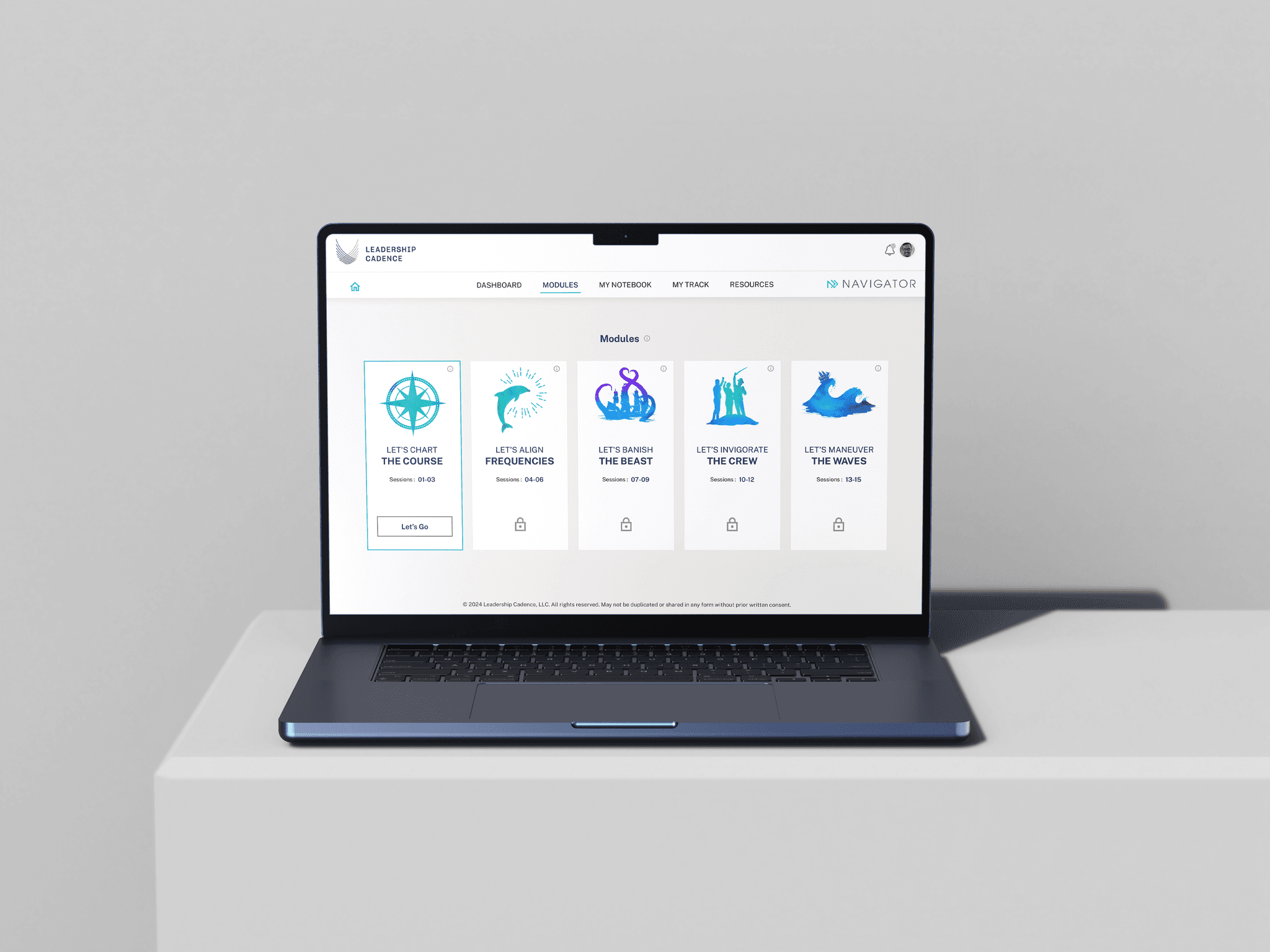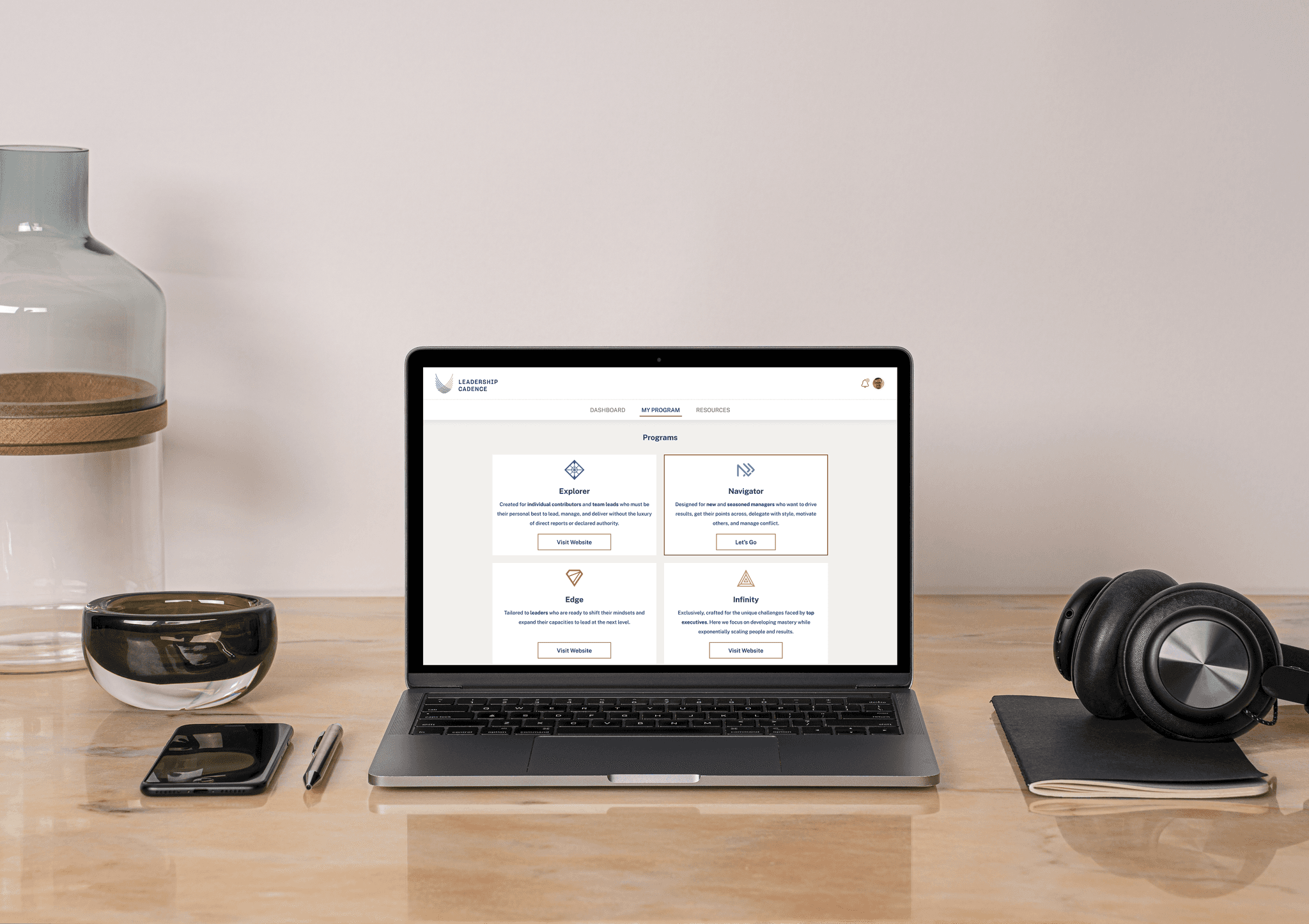

Leadership Cadence required a scalable digital platform to manage complex leadership development programs combining assessments, coaching, training, and analytics. The goal was to centralize training operations while improving participant engagement, visibility, and performance tracking across multiple user roles.
Problem
The client lacked a unified system to create, manage, and monitor leadership training programs efficiently. Existing workflows made it difficult to track participant progress, assign role-specific tasks, and generate actionable insights.
Goal
Design a centralized, role-based training management platform that enables seamless program creation, performance tracking, and scalable learning experiences for administrators, trainers, and participants.
Process
The platform was designed around role-based access for administrators, trainers, and trainees. Core workflows were structured to allow program creation, task assignment, progress tracking, and analytics within a single system. Emphasis was placed on scalability, usability, and long-term maintainability.
Research & Insights
Initial discovery focused on understanding how leadership programs were structured across assessments, coaching, and training modules. Stakeholder discussions highlighted the need for clear role separation, real-time performance visibility, and flexible program configuration to support evolving business needs.
Wireframes & Iterations
Wireframing focused on simplifying complex, role-based workflows while maintaining flexibility for program configuration. Early layouts explored multiple navigation models to support administrators, trainers, and participants without fragmenting the experience.
Designing the platform required balancing flexibility with simplicity. Supporting multiple user roles with distinct responsibilities introduced complexity in navigation and permissions. Another challenge was presenting performance data and analytics in a way that remained actionable without overwhelming users. Ensuring scalability while maintaining clarity across workflows was critical.
Outcome Summary
The final platform enabled centralized management of leadership training programs with improved visibility into learner progress, role-specific workflows, and scalable infrastructure. The solution helped streamline training operations while supporting long-term growth.
Key Learnings
Role-based design is essential for complex training ecosystems
Clear analytics improve decision-making for both trainers and administrators
Scalable architecture must be paired with intuitive UX to support growth