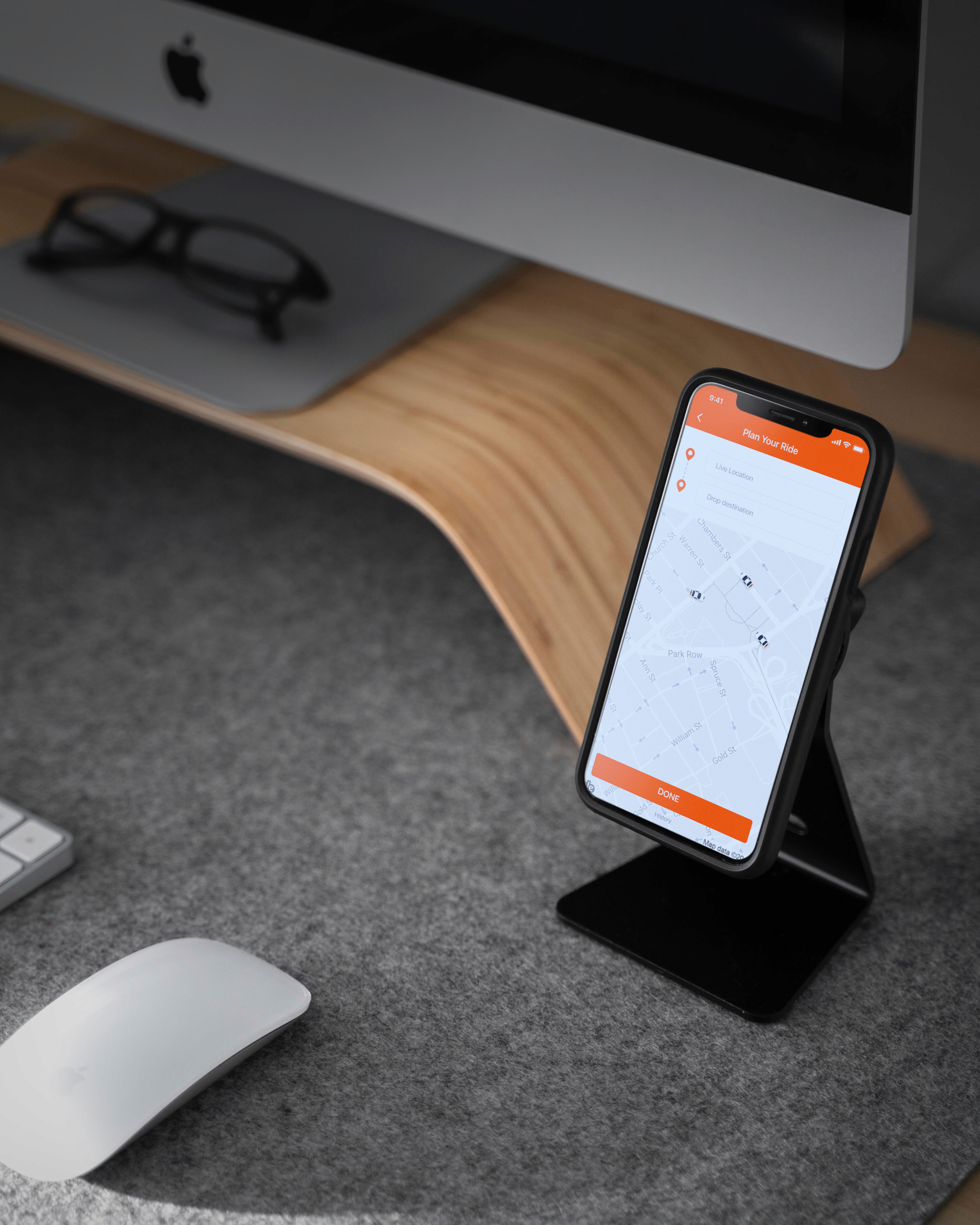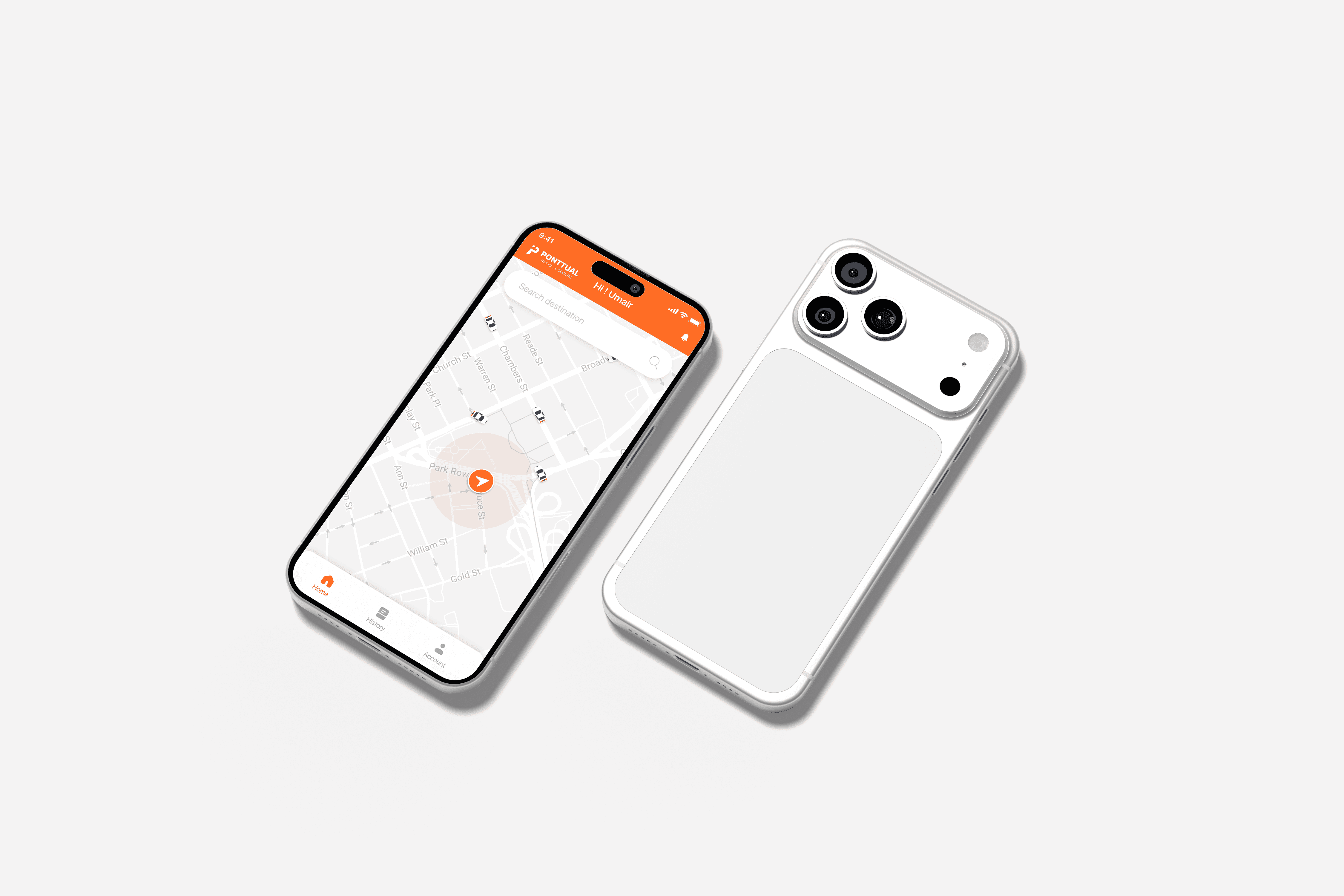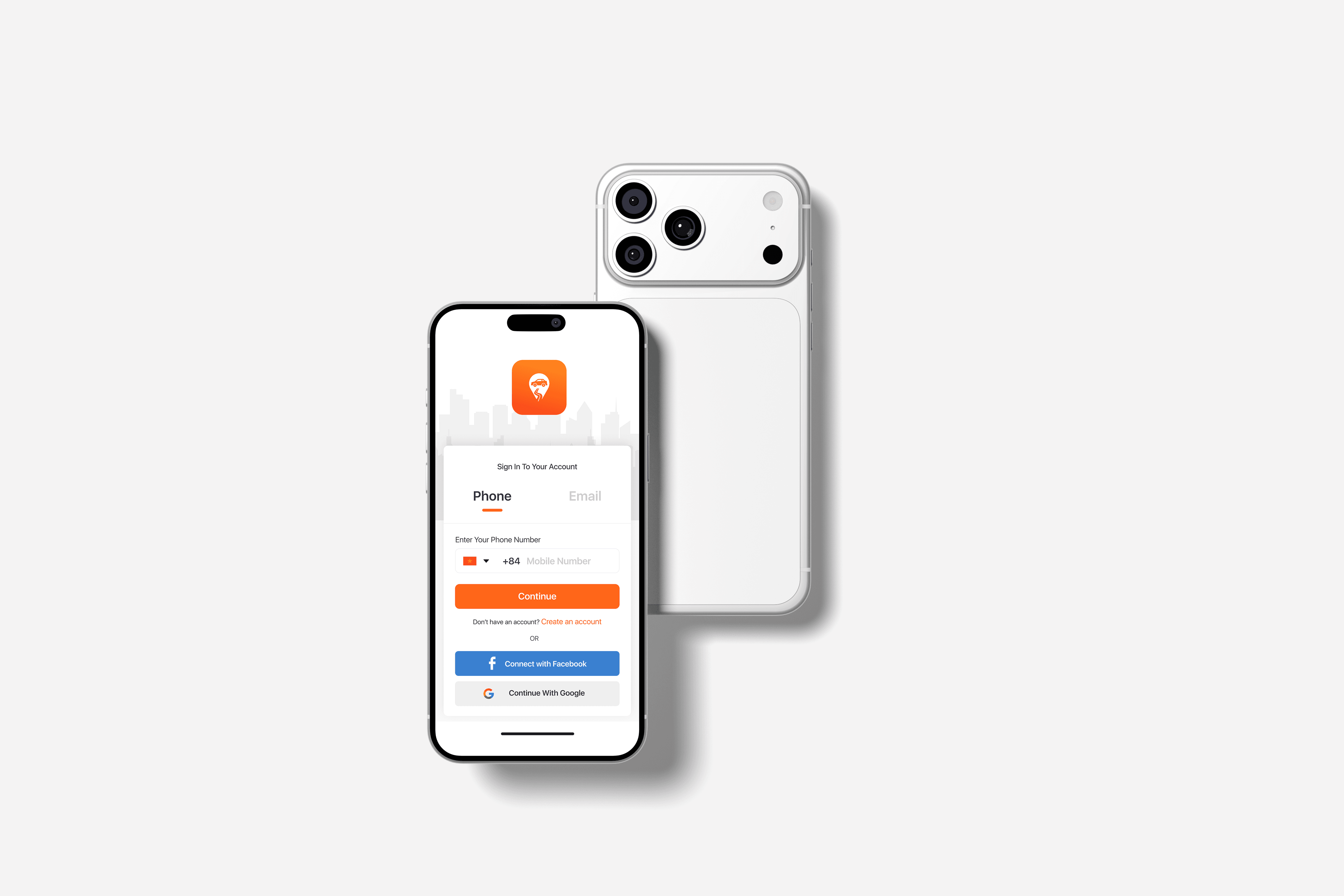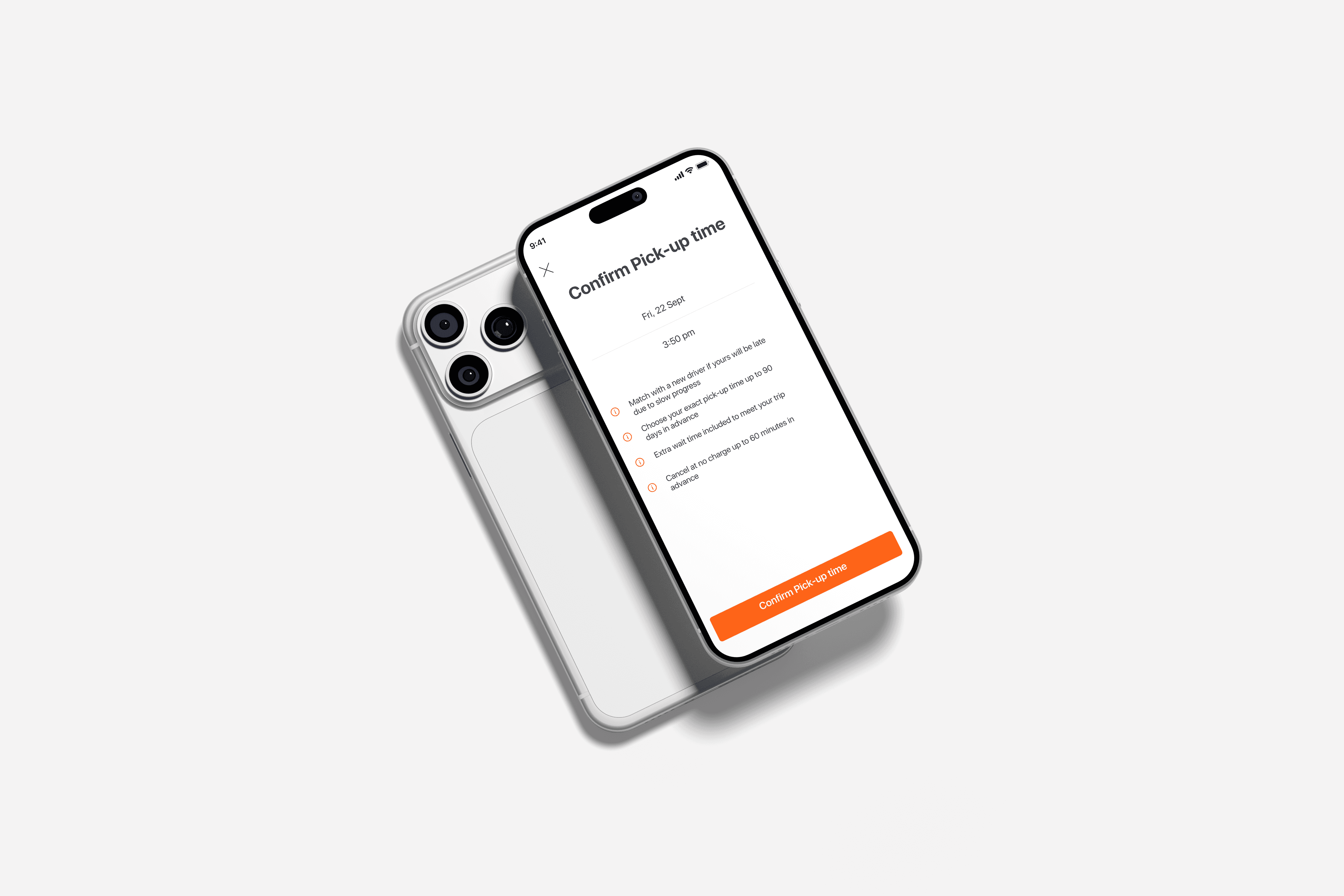
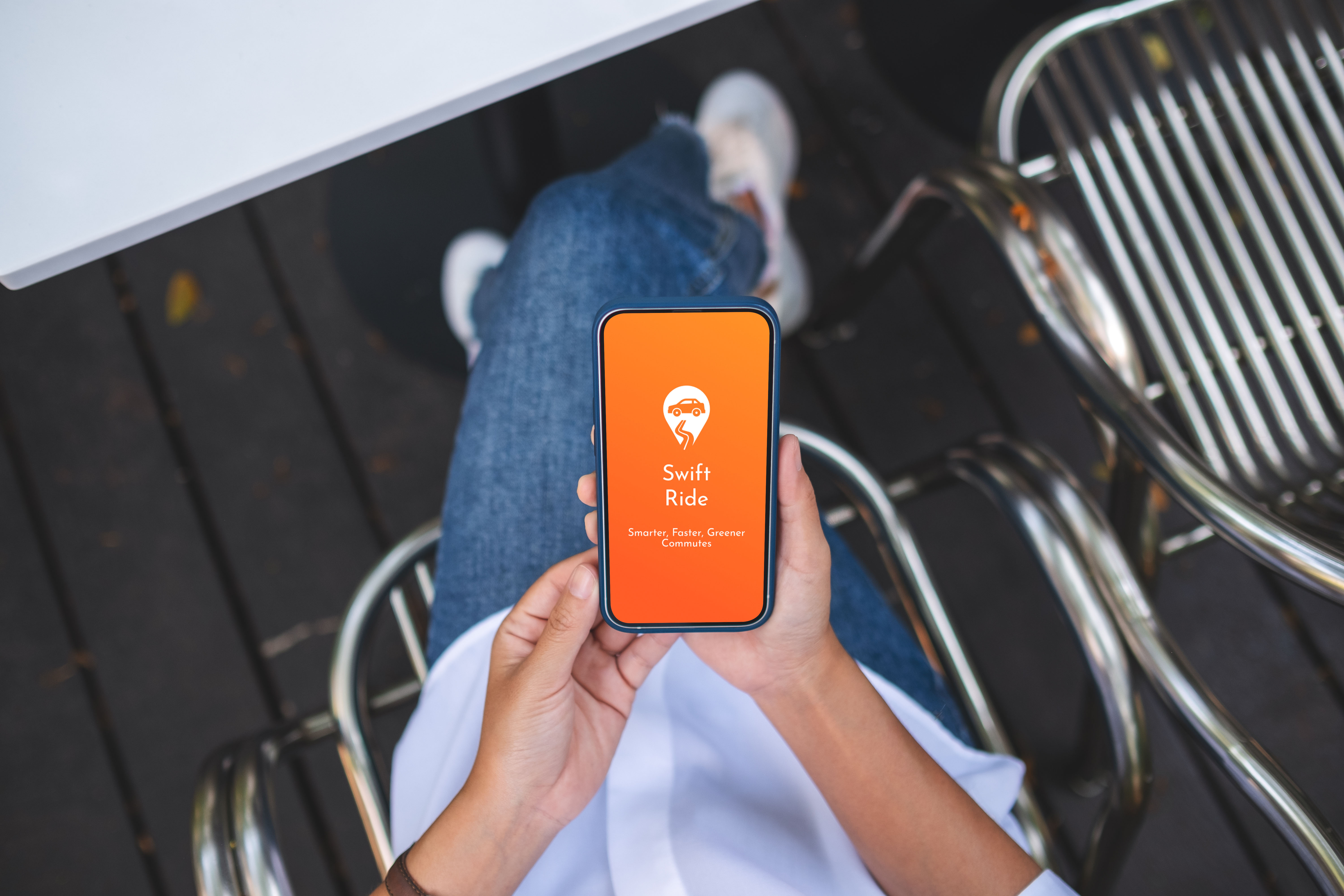
Urban commuters often face uncertainty, delays, and cognitive overload when booking daily rides—especially during peak hours.
Problem
Existing ride-hailing apps prioritise features over clarity, making quick decisions harder in time-sensitive situations.
Goal
Design a fast, trust-driven booking experience that reduces hesitation and supports confident decision-making.
User Flows & IA
The booking flow was intentionally reduced to three core steps: select ride, confirm details, and track. Removing secondary decisions early in the flow helped users progress faster without feeling rushed or confused.
Research & Insights
Initial research through competitive analysis and informal interviews revealed that users value speed and transparency over advanced ride customisation. Trust signals—such as clear pricing, driver visibility, and ride confirmation—played a major role in decision-making.
Wireframes & Iterations
Wireframes focused on thumb-friendly layouts and visual hierarchy optimised for quick scanning. Iterations prioritised reducing visual noise, improving pricing clarity, and reinforcing trust at key decision points.
Designing SwiftRide required carefully balancing speed with user trust across the booking and carpooling experience. Users often book rides on the move, so one-handed, glanceable layouts were essential. Communicating pricing clarity, driver confidence, and sustainability signals without increasing cognitive load required clear hierarchy and restraint throughout the flow.
Outcome Summary
SwiftRide demonstrates how focused information hierarchy and intentional reduction of choices can significantly improve perceived speed and confidence in urban mobility experiences.
Key Learnings
Simplicity consistently outperformed feature-heavy designs
Trust signals matter most at the moment of confirmation
Designing for movement changes layout and interaction priorities